Starting an indoor playground business can be one of the most rewarding investments in the family entertainment industry. As more parents look for safe, clean, and weather-independent places where children can play, the demand for indoor play centers continues to grow worldwide.
However, many first-time investors ask the same questions:
- How much does it cost?
- What equipment do I need?
- How big should the venue be?
- How do I find customers?
- Which manufacturer should I choose?
If you’re asking these questions, you’re in the right place.
In this guide, we’ll walk you through every step of opening an indoor playground business—from your first idea to welcoming your first customers.
Step 1: Understand Your Local Market
Before spending any money, research your local market.
Ask yourself:
- Are there existing indoor playgrounds nearby?
- What do they charge?
- What age groups do they target?
- What services do they offer?
- What are customers complaining about?
Look at:
- Google Reviews
- Facebook reviews
- Local parenting groups
- Competitor websites
Your goal isn’t to copy competitors—it’s to identify opportunities they may have overlooked.
Step 2: Create an Indoor Playground Business Plan
Every successful business starts with a clear plan.
Your business plan should include:
Target Customers
Examples include:
- Families with children aged 2–12
- Schools
- Daycare centers
- Birthday parties
- Community organizations
Revenue Sources
Don’t rely only on admission tickets.
Many successful playgrounds earn revenue from:
- Entrance fees
- Birthday parties
- Membership programs
- Café sales
- Snacks and drinks
- Merchandise
- Holiday events
- Educational programs
The more revenue streams you build, the more stable your business becomes.
Step 3: Estimate Your Startup Budget
One of the biggest questions is:
How much does it cost to open an indoor playground?
The answer depends on several factors:
- Facility size
- Country
- Equipment quality
- Theme customization
- Installation requirements
Typical startup expenses include:
| Expense | Description |
|---|---|
| Rent | Monthly facility lease |
| Renovation | Flooring, lighting, HVAC |
| Indoor playground equipment | Largest investment |
| Shipping | International freight |
| Installation | Professional assembly |
| Insurance | Business liability |
| Marketing | Website, advertising |
| Staff training | Operations |
Although every project is different, planning a realistic budget early helps avoid unexpected costs later.
Step 4: Choose the Right Location
Location can significantly impact your business success.
Look for areas with:
- High population density
- Young families
- Easy parking
- Shopping centers
- Residential communities
- Schools nearby
A good location is often more valuable than a larger facility.
Step 5: Decide Your Playground Size
Indoor playgrounds come in many sizes.
Examples include:
Small (100–300㎡)
Ideal for:
- Cafés
- Small communities
- Daycare centers
Medium (300–800㎡)
Suitable for:
- Shopping malls
- Independent businesses
Often includes:
- Soft play
- Toddler zone
- Ball pit
- Party room
Large (800㎡+)
Can include:
- Trampoline park
- Ninja course
- Rope course
- Climbing attractions
- Café
- Multiple party rooms
Larger playgrounds generally provide more attractions and longer visitor stays.
Step 6: Design a Playground That Fits Your Market
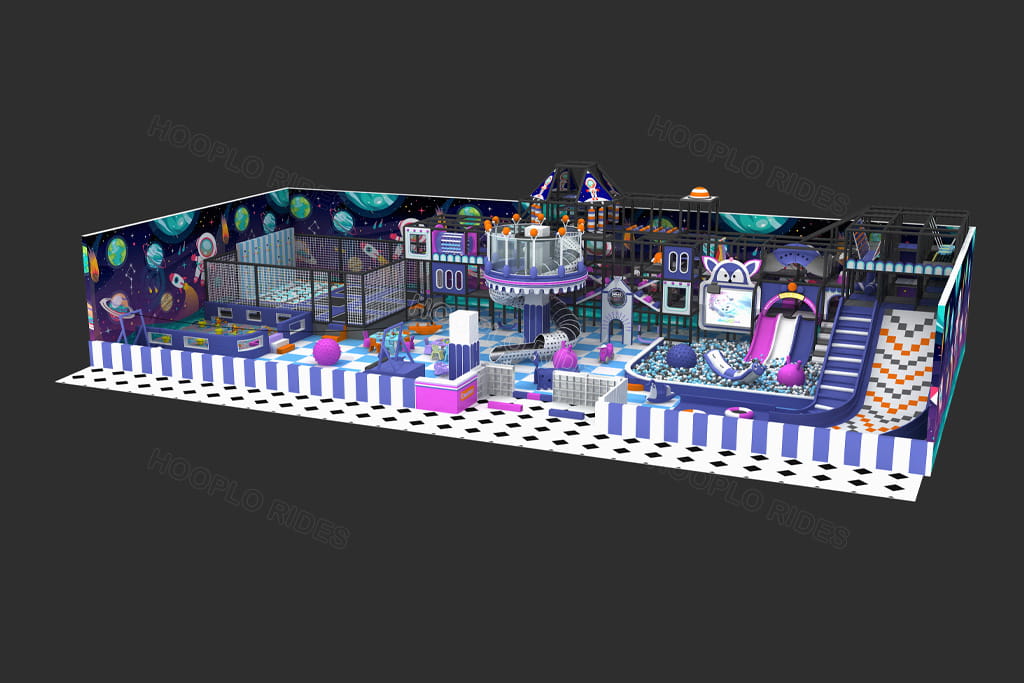
A great playground isn’t simply filled with equipment.
Good design balances:
- Safety
- Traffic flow
- Visibility for parents
- Age separation
- Capacity
- Maintenance
- Future expansion
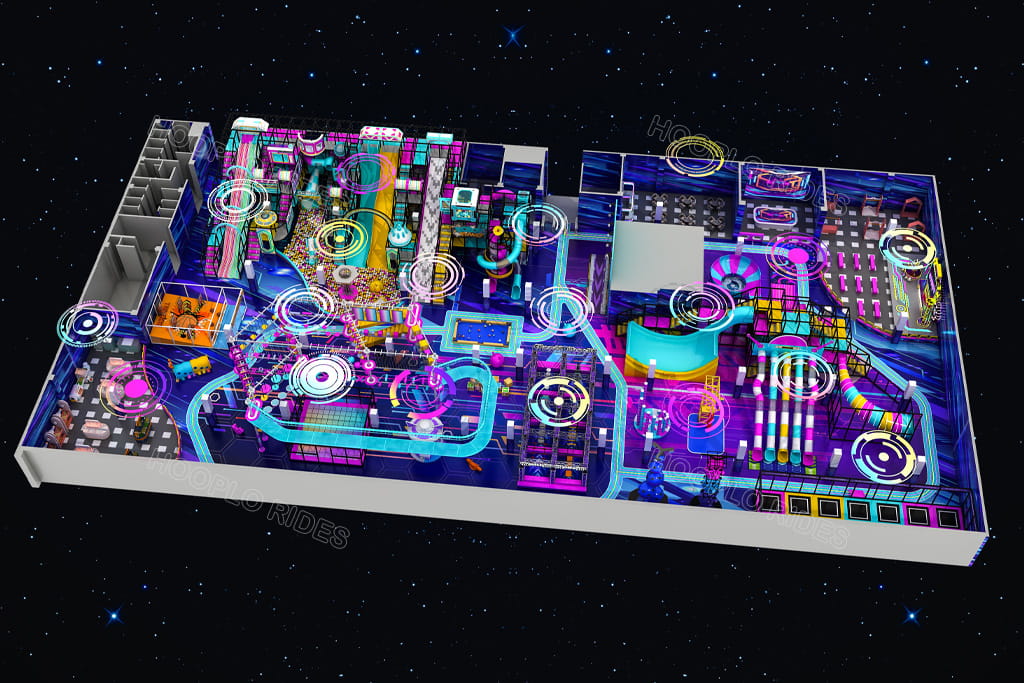
Most professional manufacturers provide free 3D layouts before production begins.
This allows you to optimize every square meter of your venue.
Step 7: Choose the Right Equipment
Your equipment determines much of the customer experience.
Popular attractions include:
- Soft play structures
- Slides
- Ball pits
- Volcano climbers
- Trampolines
- Interactive projection games
- Toddler areas
- Ninja courses
- Donut slides
- Spiral slides
Instead of choosing everything available, focus on attractions that match your target customers and available space.
Step 8: Work with a Reliable Manufacturer
Choosing the right manufacturer is one of the most important decisions you’ll make.
Look for a supplier that offers:
- Custom design services
- International certifications
- High-quality materials
- Professional production
- Quality inspection
- Worldwide shipping
- Installation support
- After-sales service
- Spare parts availability
A trustworthy manufacturer helps reduce risks throughout the project.
Step 9: Shipping and Installation
Most manufacturers ship equipment worldwide using sea freight.
Before shipping, confirm:
- Packaging
- Loading plans
- Customs documentation
- Installation drawings
- Installation videos
Professional installation ensures every component is assembled safely and correctly.
Step 10: Obtain Required Licenses and Insurance
Requirements vary by country.
Common requirements include:
- Business registration
- Fire safety approval
- Liability insurance
- Health inspections
- Building permits
Always consult your local authorities before opening.
Step 11: Hire and Train Your Team
Even the best playground depends on great staff.
Train employees on:
- Customer service
- Safety inspections
- Daily cleaning
- Emergency procedures
- Equipment maintenance
Friendly staff help create positive experiences that encourage repeat visits.
Step 12: Promote Your Indoor Playground Before Opening
Marketing should begin before your grand opening.
Effective strategies include:
Social Media
Share:
- Construction updates
- Equipment installation
- Behind-the-scenes videos
- Countdown posts
Google Business Profile
Optimize your profile with:
- Photos
- Business hours
- Reviews
- Directions
Grand Opening Event
Offer:
- Free trial tickets
- Discounts
- Giveaways
- Family activities
A successful opening creates momentum and attracts early loyal customers.
Common Mistakes First-Time Investors Make
Avoid these common pitfalls:
Choosing the cheapest equipment
Low prices often mean lower quality and higher maintenance costs.
Ignoring local demand
Every market is different.
Poor layout planning
A crowded design reduces customer satisfaction.
No long-term maintenance plan
Regular inspections extend equipment lifespan.
Underestimating marketing
Even the best playground needs consistent promotion.
Frequently Asked Questions
Is an indoor playground profitable?
Yes, many indoor playgrounds generate steady income through admissions, birthday parties, memberships, food sales, and seasonal events. Profitability depends on location, operational efficiency, customer experience, and marketing.
How much space do I need?
Most commercial indoor playgrounds start around 200㎡, but many successful facilities range between 500㎡ and 2,000㎡.
How long does production take?
Depending on project size and customization, production usually takes several weeks to a few months, followed by shipping and installation.
Can I customize the design?
Yes. Most professional manufacturers offer fully customized layouts, themes, colors, and branding based on your venue.
Final Thoughts
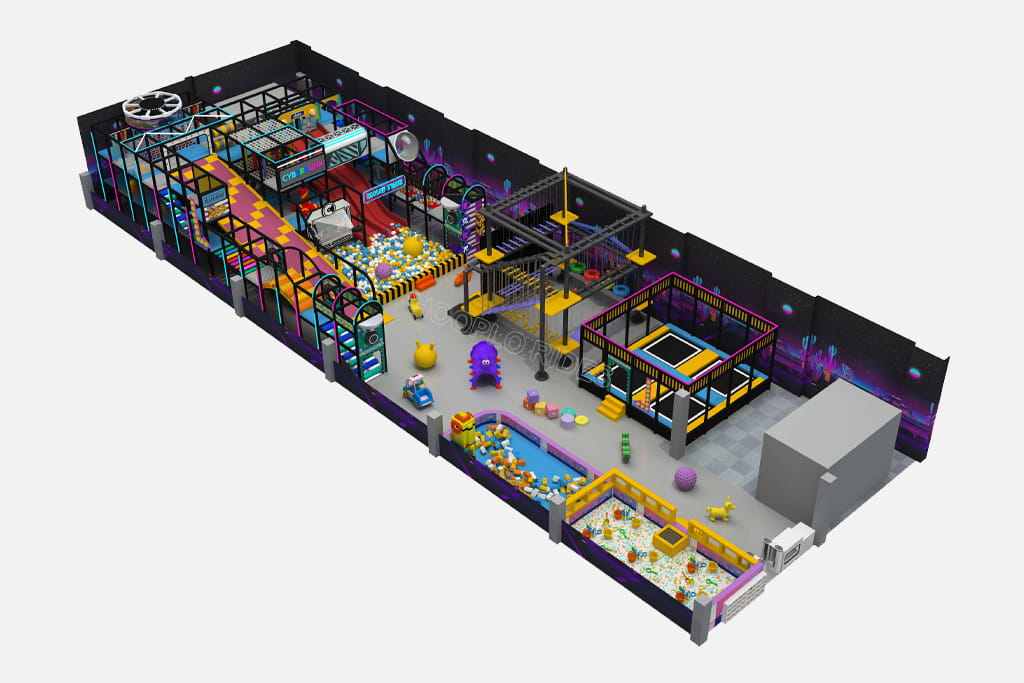
Starting an indoor playground business may seem overwhelming at first, but breaking the process into manageable steps makes it much easier.
Success comes from understanding your market, planning your investment carefully, choosing high-quality equipment, and working with an experienced manufacturer who can support you from concept to installation.
Whether you’re planning a small community play area or a large family entertainment center, taking the time to prepare properly will help you create a safe, engaging, and profitable destination for families.
Ready to Start Your Indoor Playground Project?
If you’re considering opening an indoor playground, our team is here to help. We provide free layout design, customized equipment solutions, worldwide shipping, installation guidance, and comprehensive after-sales support.
Simply send us your venue dimensions or floor plan, and we’ll create a customized proposal and quotation tailored to your project—completely free of charge.